
<img height="1" width="1" style="display:none;" alt="" src="https://px.ads.linkedin.com/collect/?pid=4368962&amp;fmt=gif">
Inspection Solutions for Beverage Manufacturers Protect Quality, Brand Reputation, and Consumer Safety

Beverage Inspection Systems for Contaminant Detection and Quality Control

Beverage manufacturers face unique product inspection challenges. Whether producing bottled water, soft drinks, dairy products, or alcoholic beverages, ensuring product quality and preventing contamination are essential to consumer safety and brand protection.

Contaminants can enter the production process at multiple stages, from ingredient handling and mixing to filling, packaging, and final case packing. Manufacturers must also verify fill levels, package completeness, and product consistency with the added pressure of meeting regulatory and customer requirements.

CASSEL Inspection provides advanced product inspection systems that help beverage manufacturers detect contaminants, verify product quality, and maintain confidence in every package that leaves the facility.

Industrial-wine-bottling-plant

Why Do Beverage Manufacturers Need Product Inspection?

Beverage production involves a variety of raw ingredients, processing equipment, packaging materials, and filling systems that can introduce contamination risks throughout any point of production.

For powdered beverage mixes and tea products, such as loose tea and tea bags, contamination risks may occur during ingredient blending, material handling, or packaging processes. For liquid products, filling operations often represent one of the most critical control points for product inspection.

Common contamination risks include:

  • Metal fragments from processing equipment

  • Worn machine components

  • Foreign materials entering through ingredient handling processes

  • Contamination introduced while blending or mixing

  • Broken glass from damaged bottles

  • Contaminants introduced during filling operations

  • Packaging defects and incomplete products

Incorporating the appropriate inspection technology at key stages of production helps beverage manufacturers identify potential issues before products reach customers.

Metal Detection for the Beverage Industry

Metal contamination can enter beverage production in more ways than many manufacturers realize.

Common sources of metal contamination in beverage manufacturing include:

  • Raw ingredients such as sugar, flavorings, color additives, concentrates, and powdered agents

  • Supplier-related risks, when incoming materials have not been adequately inspected upstream

  • Processing equipment wear and tear, including pumps, mixers, valves, screens, and piping systems

  • Broken machine components or loose fasteners

  • Environmental contaminants introduced during ingredient handling and transfer

  • Filling and packaging equipment wear

Because metal contamination risks can occur at multiple points in production, beverage manufacturers often implement metal detection systems at Critical Control Points based on their processes, customer requirements, and quality objectives.

Pipeline Metal Detection for Liquid Beverage Processing

Pipeline metal detectors provide a reliable way to inspect liquid and pumpable beverage products for metal contamination before filling and packaging. Beverage manufacturers can use pipeline metal detection systems to detect and automatically reject ferrous, non-ferrous, and stainless-steel contaminants within the liquid product, including water, juice, milk, beer, wine, and other alcoholic beverages, and liquid ingredients.

Pipeline metal detectors are commonly installed after blending, mixing, filtration, and pumping processes, and immediately before filling equipment.

Metal Detection for Dry Beverage Products

Not all beverage products are liquids. Powdered drink mixes, nutritional beverage powders, tea products, and other dry beverage ingredients can be inspected using gravity-fed or conveyor-based metal detection systems.

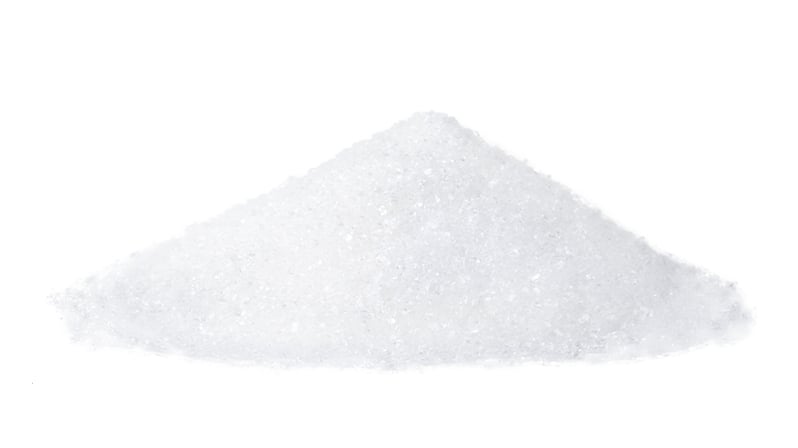
Heap of sweet sugar

Raw Ingredient Inspection

Many beverage manufacturers rely on supplier quality programs to reduce contamination risks. However, some facilities choose to inspect incoming ingredients as an added layer of protection.

Raw ingredient inspection can help identify contamination before ingredients enter the production process, reducing the risk of equipment damage and preventing contaminants from moving further downstream.

Examples include:

  • Sugar and sweeteners

  • Flavorings and concentrates

  • Powdered beverage ingredients

  • Tea leaves and botanicals

  • Dairy ingredients

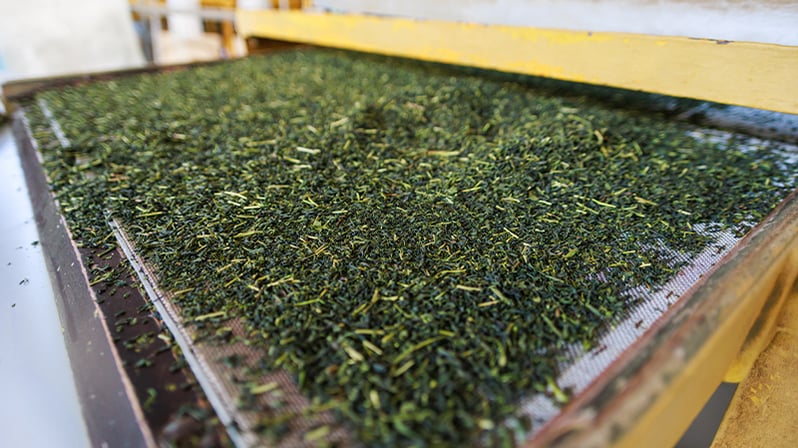
Special equipment for rolling, sorting, cleaning and drying tea leaves

In-Process Inspection

Metal detection can also be installed during mixing and processing operations before products reach filling equipment. By identifying contamination earlier in production, manufacturers can isolate smaller quantities of affected product and reduce waste.

Applications include:

  • Liquid products moving through pipelines

  • Mixed beverage formulations before filling

  • Powdered drink ingredients in gravity-fed drop-through systems

  • Tea products before bagging or boxing

Earlier inspection also improves sensitivity, allowing manufacturers to detect smaller contaminants before products enter larger containers.
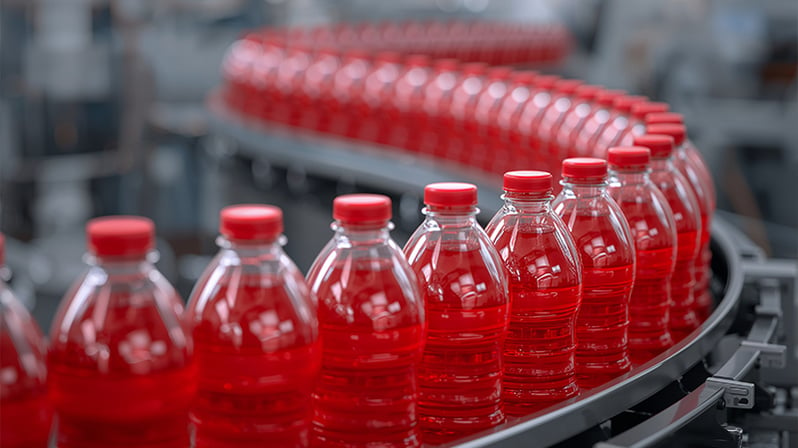
A continuous line of red soda bottles moving on a conveyor belt

Final Package Inspection

Many beverage manufacturers choose to perform a final inspection after products have been packaged. This additional quality control step helps verify product safety and ensure contaminated products do not leave the facility.

Applications include:

  • Bottled water and soft drinks

  • Glass beverage bottles

  • Powdered drink mixes and tea products

  • Multi-pack beverage cases

*** It's important to remember that the appropriate inspection technology depends on the product and packaging material. Foil-lined containers and aluminum canned beverages typically require X-ray inspection for final package inspection because the container itself may interfere with traditional metal detection systems.
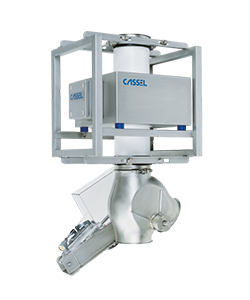
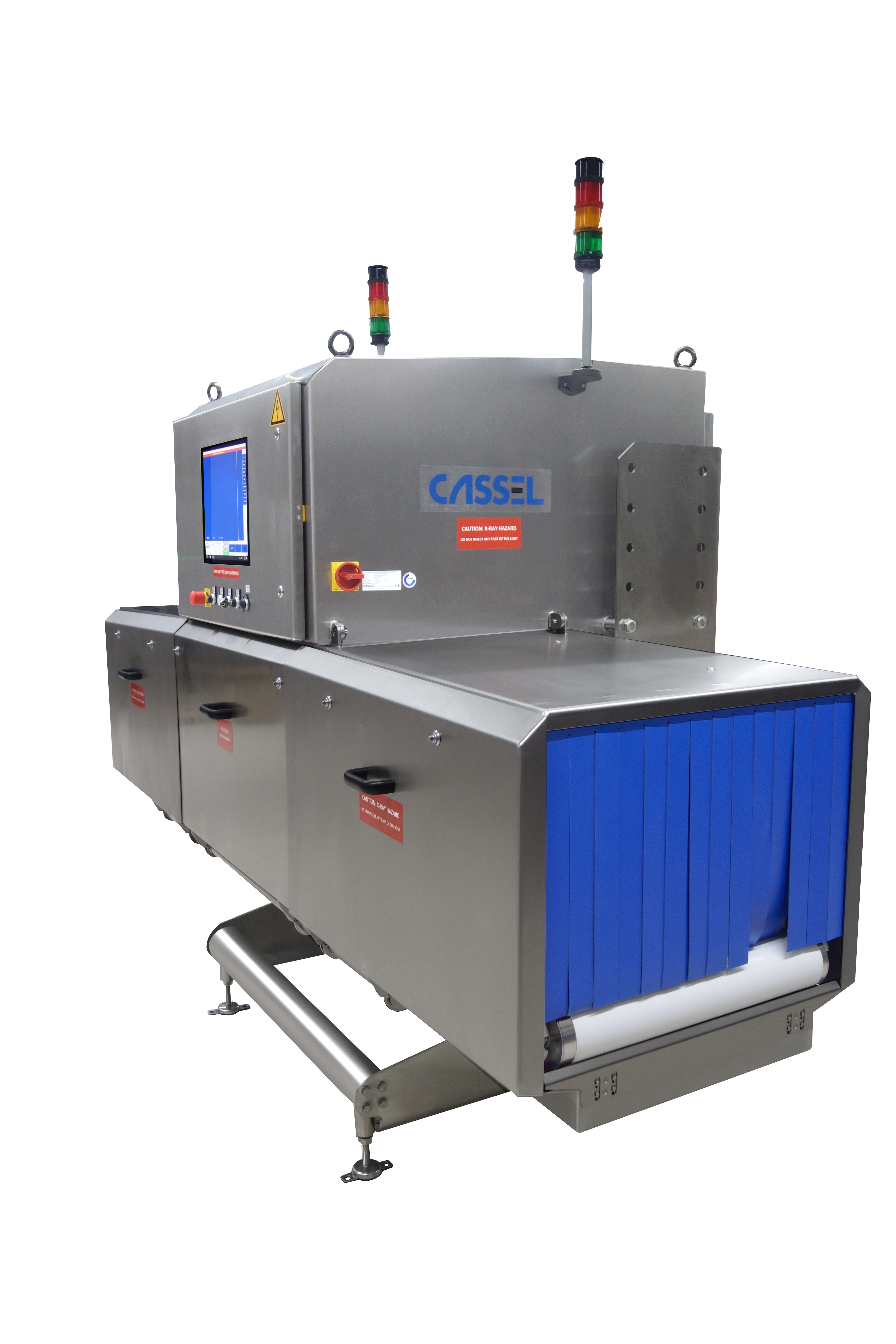
Metal Detectors for Beverage Manufacturers

CASSEL Inspection works with beverage manufacturers to identify the right metal detection solution for their production process. We help identify the most effective Critical Control Points based on contamination risks, customer requirements, production goals, facility constraints, and budget considerations.

Explore our portfolio of metal detection systems designed to strengthen beverage quality assurance programs and support consumer safety.

metal-detectors-for-gravity-feeds

How is X-ray Inspection Used in the Beverage Industry?

X-ray inspection systems help beverage manufacturers detect contaminants that may be difficult or impossible to identify using traditional metal detection technology alone. Unlike metal detectors, X-ray inspection systems are not affected by metal containers, aluminum cans, foil packaging, or certain package components.

X-ray systems can detect contaminants such as:

  • Metal

  • Glass

  • Stone

  • Some dense plastic and rubber

CASSEL_XRAY SHARK_XD 47_01_P210623

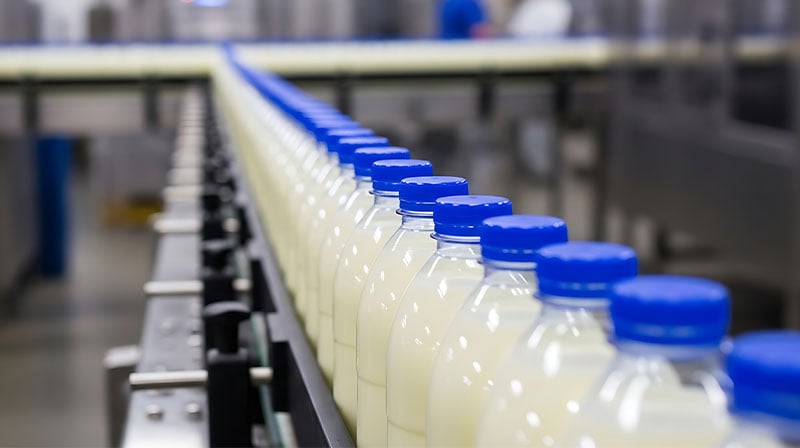
Milk-Bottles-with-Blue-Caps-Moving-on-a-Conveyor-Belt

Bottled Beverages

Glass and plastic bottles, including bottled water, sparkling water, juices, ready-to-drink teas, dairy beverages, and alcoholic beverages, are among the most common beverage packaging formats inspected using side-view X-ray technology. For glass beverage applications, side-view (or side-shoot) X-ray systems can detect glass fragments inside glass containers, helping manufacturers identify contamination that may occur when other nearby bottles break during handling or production.
golden-beer-cans

Aluminum Cans

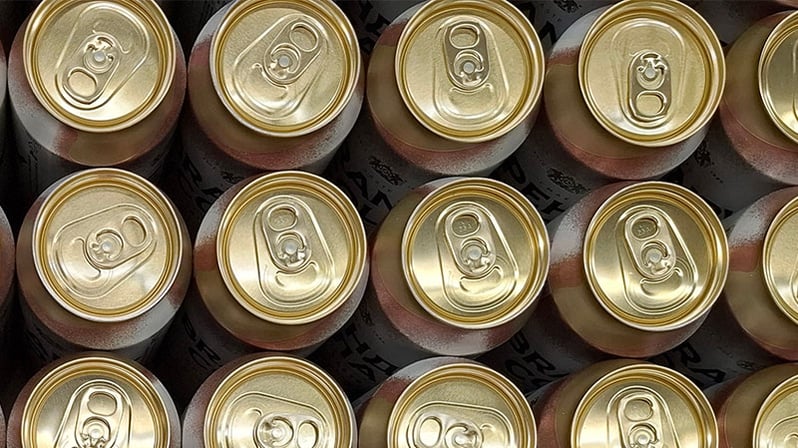
Because metal containers cannot be effectively inspected using metal detection systems, canned beverages require X-ray inspection after packaging. Side View X-Ray Inspection Machines are commonly used to inspect upright beverage cans in a chicane system, allowing contaminant detection in shorter shields.
production-of-juices-in-cardboard-packaging

Cartons and Foil-Based Packaging

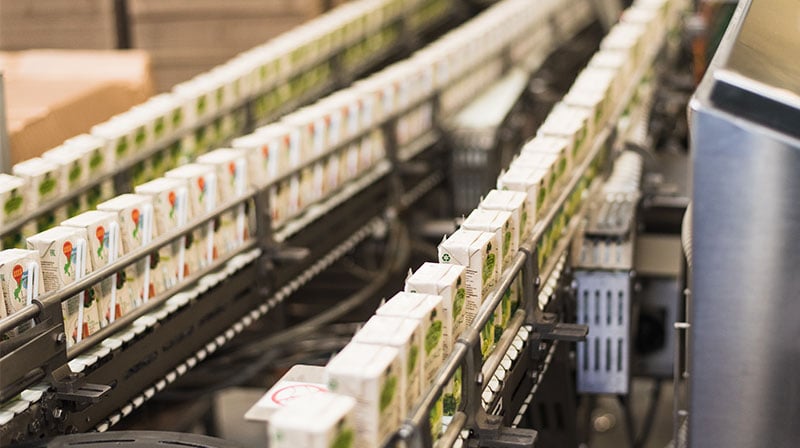
Many beverage products, including shelf-stable milk, creamers, broths, and nutritional beverages, are packaged in cartons with foil-barrier materials. Because foil packaging limits the effectiveness of traditional metal detection, X-ray inspection is often used as the primary inspection method for these types of finished packages.

a-tea-bag-lies-on-top-of-a-set-of-tea-bags

Powdered Beverage Mixes and Tea Products

Powdered drink mixes and boxed tea products can be inspected using X-ray systems before or after packaging. Depending on the application, manufacturers may inspect individual packages or finished cases to detect and reject any bad product from continuing on to the customer.
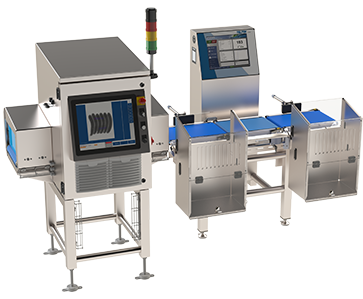
Side-view X-Ray Inspection for Fill-Level Verification and Package Inspection

While inspecting for foreign material contamination, side-shoot X-ray technology can provide the added benefit of verifying fill levels and identifying underfilled containers, helping reduce customer complaints and maintain product consistency. This added capability allows manufacturers to combine contaminant detection, fill-level verification, and package inspection into a single inspection point.

X-ray Inspection Equipment for the Beverage Industry

As with all of our metal and foreign object detection systems, CASSEL Inspection offers advanced X-ray inspection systems designed for bottled beverages, canned products, cartons, powdered drink mixes, and other beverage applications.

Explore our complete portfolio of X-ray inspection solutions for beverage manufacturing.

Checkweighers for Beverage Production

Checkweighers help beverage manufacturers verify product weight and package consistency throughout the production process. While these systems are most commonly installed near the end of the production line, they can be integrated at various points depending on a manufacturer's contamination concerns, quality objectives, customer requirements, and budget.

Applications include:

  • Verifying fill weights in bottles, cans, cartons, and other beverage containers

  • Identifying underfilled or overfilled containers/packages

  • Verifying product counts in multi-pack beverage cases or cartons

  • Detecting missing, damaged, or leaking products through unexpected weight variations

By reducing underfill and overfill risks, minimizing product giveaway, and helping prevent customer complaints, checkweighers provide beverage manufacturers with an additional layer of product verification before products leave the facility.

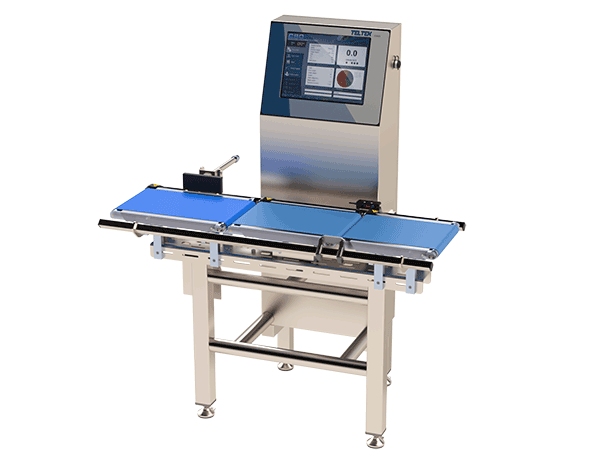
Teltek Checkweigher_C80 S3 v2_transp_Display

Checkweighers for the Beverage Industry

Through a long-standing partnership with Teltek, CASSEL Inspection offers checkweighers as an added layer of protection for quality assurance and control.

Sweden-based Teltek specializes in precision checkweighing for demanding, hygienic production lines. Its longtime partnership with CASSEL unites both companies' core capabilities into one integrated inspection solution.

The precision of our checkweighers will provide a guarantee that your company lives up to regulations and standards regarding product weight. Combining our metal detection or X-ray inspection systems with a checkweigher into a single functional unit enables optimal productivity and space savings.

checkweigher-for-conveyor-products-1

Why Choose CASSEL for Beverage Product Inspection?

CASSEL Inspection partners with beverage manufacturers to design and implement inspection systems that support product quality, consumer safety, and regulatory compliance.

Our consultative approach helps beverage manufacturers identify the right technology, optimal Critical Control Points, and machine type based on their unique production challenges, customer requirements, operational goals, best practices, and budget constraints.

Whether integrating a single inspection system or building a comprehensive quality assurance strategy, CASSEL Inspection provides support from equipment selection and installation through ongoing service and maintenance.

We deliver beverage inspection solutions engineered for:

  • Contaminant detection

  • Fill-level verification

  • Product quality assurance

  • Food safety and regulatory compliance

  • Customer satisfaction

  • Long-term brand protection

Contact us today to discuss the right inspection solution for your beverage production line.